
In today’s interconnected world, the ability to communicate across languages has become essential. The keyword övrrsätt, which is derived from the Swedish word översätt (meaning “translate”), reflects one of the most powerful tools for bridging cultural and linguistic gaps—translation. Whether it is for literature, business, diplomacy, or digital communication, translation shapes how we connect and understand each other. This article explores the history, significance, methods, challenges, and future of translation, framed through the lens of the concept övrrsätt.
The Origin of the Term “Övrrsätt”
The term övrrsätt is closely linked to the Swedish verb översätta, which directly means “to translate.” While the unusual spelling of övrrsätt may look different, it conveys the same idea: the act of carrying meaning from one language into another. This act is not only linguistic but also cultural, as it requires more than simply replacing words. It requires transferring ideas, tone, and intent.
Understanding the essence of övrrsätt means understanding translation not just as a mechanical act, but as a deeply human process of bridging divides.
The Importance of Övrrsätt (Translation) in Human History
Translation has existed for as long as people have spoken different languages. Ancient societies relied on interpreters and translators to trade, form alliances, and exchange knowledge. For example:
- The Rosetta Stone was one of the earliest tools that allowed scholars to understand Egyptian hieroglyphs through translation into Greek.
- In medieval Europe, translation of Arabic texts into Latin brought scientific, mathematical, and philosophical knowledge that shaped the Renaissance.
- Religious texts, such as the Bible and Quran, were translated into dozens of languages, spreading spiritual teachings across continents.
Without övrrsätt, much of human history, culture, and knowledge would have remained locked within linguistic boundaries.
Övrrsätt in Modern Times
In today’s world, övrrsätt plays an even more critical role. The rise of the internet, global business, and cultural exchange has made translation indispensable. Some key areas where translation impacts our lives include:
- International Business – Global companies rely on accurate translation to market products, draft contracts, and build trust with customers in different countries.
- Education and Research – Academic papers, scientific research, and technical manuals are often translated to ensure knowledge is shared across borders.
- Media and Entertainment – Movies, TV shows, music, and books reach international audiences through dubbing and subtitles.
- Technology – Software, apps, and websites rely on translation to be user-friendly in multiple languages.
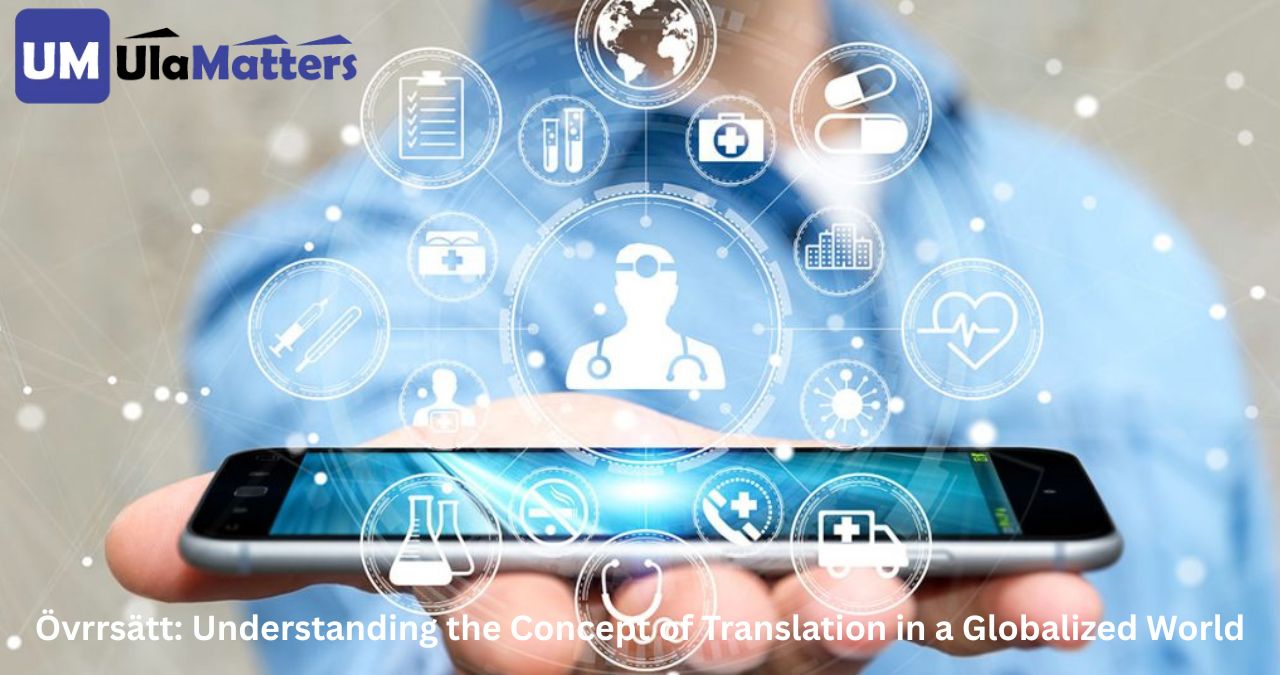
- Healthcare and Law – Translation ensures patients understand medical instructions and legal documents, making it a matter of safety and justice.
The importance of övrrsätt today cannot be overstated—it has become a fundamental part of globalization.
Different Types of Translation (Övrrsätt)
Translation is not a one-size-fits-all process. Depending on context, different forms of övrrsätt are used:
- Literal Translation – Word-for-word, often used in technical manuals.
- Literary Translation – Used for novels, poetry, and plays, requiring creativity to preserve emotion and style.
- Legal Translation – Extremely precise, as even small errors can have major consequences.
- Medical Translation – Demands accuracy and clarity for patient safety.
- Technical Translation – Used for engineering, software, and instructions.
- Machine Translation – Automated systems like Google Translate or DeepL, which are improving with AI.
Each type of övrrsätt requires unique skills, proving that translation is both a science and an art.
Challenges in Övrrsätt (Translation)
While translation is powerful, it is not without challenges.
- Idioms and Expressions – Some phrases have no direct equivalent in another language. For example, the English phrase “it’s raining cats and dogs” cannot be literally translated without sounding strange.
- Cultural Context – Words carry cultural meaning. A joke that is funny in one culture might be offensive in another.
- Technical Accuracy – In medicine or law, one mistranslated word could lead to serious harm.
- Speed vs. Quality – Businesses often demand quick translations, but quality requires time.
- Machine Limitations – While AI translation has advanced, it still struggles with nuance, humor, and creativity.
These challenges make professional translators essential in ensuring that övrrsätt is effective and accurate.
The Role of Technology in Övrrsätt
Technology has transformed how translation is done. Early translators relied on dictionaries and manual methods, but today we have:
- CAT Tools (Computer-Assisted Translation) – Programs that help human translators work faster by storing previously translated phrases.
- Machine Translation – Services like Google Translate and DeepL that provide instant translations.
- AI and Neural Networks – Modern systems learn from context, making translations smoother and more natural.
Still, while machines are helpful, they cannot yet fully replace human translators. True övrrsätt requires cultural sensitivity, creativity, and emotional intelligence.
Övrrsätt as Cultural Exchange
One of the most beautiful aspects of övrrsätt is how it allows people to experience cultures beyond their own. For example:
- Japanese manga and anime reach global audiences through translation and subtitles.
- Spanish literature, such as works by Gabriel García Márquez, inspire millions thanks to translation.
- African proverbs, Chinese philosophy, and Persian poetry become universal treasures through the art of övrrsätt.
Without translation, the world would be fragmented into isolated language groups. With it, we can share ideas, art, and values across cultures.
The Future of Övrrsätt
As globalization continues, the demand for translation will only increase. Some predictions include:
- More AI Integration – Machine translation will become faster and more accurate, especially for everyday use.
- Human-AI Collaboration – Professional translators will work alongside AI, ensuring both speed and quality.
- Real-Time Translation Devices – Smartphones and earbuds are already offering live translation, making cross-language conversation easier.
- Preservation of Endangered Languages – Translation technology will help document and preserve minority languages.
- Global Workforce Expansion – As remote work grows, translation will help teams collaborate across borders.
The future of övrrsätt looks bright, with new technologies making communication even more seamless.
Lessons from the Concept of Övrrsätt
The deeper lesson of övrrsätt is not just about words—it is about human connection. Translation reminds us that:
- Language is powerful, but it should not divide us.
- Understanding requires effort, empathy, and sensitivity.
- Cultures can enrich each other when ideas are shared.
- Technology is a tool, but human creativity remains essential.
By embracing the idea of övrrsätt, we move toward a world that values diversity while seeking unity.
Conclusion
The concept of övrrsätt captures one of the most vital aspects of human communication: translation. From ancient history to modern globalization, translation has enabled trade, diplomacy, literature, and cultural exchange. While technology has enhanced the speed and accessibility of translation, the human element remains irreplaceable.
As the world becomes more connected, övrrsätt will continue to play a central role in bridging cultures, spreading knowledge, and fostering understanding. It is not merely about replacing words—it is about creating meaning, building relationships, and ensuring that no voice is lost in translation.