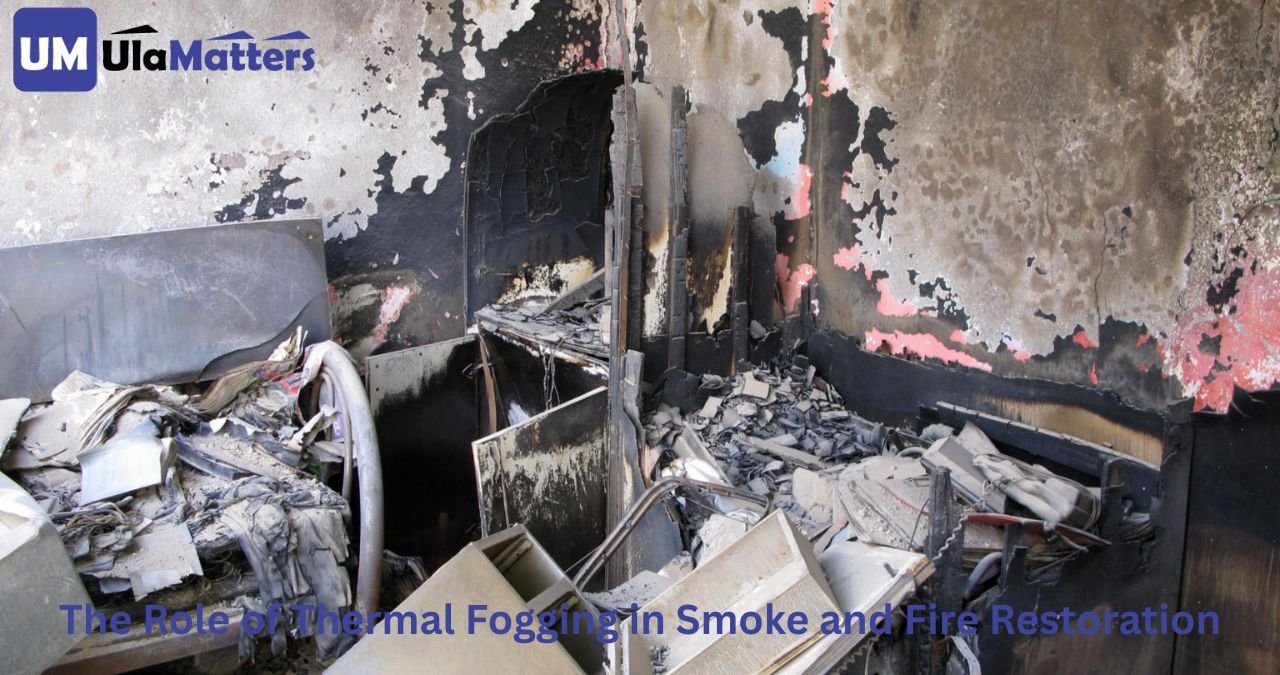

The issue does not end with the visible destruction following a fire. The smoke particles and odor get into the deep parts of the walls, furniture and air systems. This is where innovative methods are relevant. Thermal fogging is significant in professional Smoke and Fire Restoration to remove the residual smoke and lingering smell that cannot be accessed through conventional methods of cleaning.
Understanding Smoke Damage After a Fire
Smoke damage is complex. It disperses way beyond the point of burning, and gets into porous substances such as drywall, carpets, insulation, and fabrics. Microscopic smoke particles are still retained even after surface cleaning is done. In the long run, these particles may result in repetitive odors, color changes as well as indoor air problems. To restore effectively, it is necessary to have a method, which focuses on the smoke on a molecular level.
How Thermal Fogging Works in Smoke and Fire Restoration
In thermal fogging, there is a solution of deodorizers which is heated and then it becomes a thick fog. This fog resembles the movements of smoke. It moves in the same crevices, cracks and cracks that smoke has been concealed. After dispersion, the fog neutralizes odor causing particles rather than covering them.
The reason why the technique is popular among professional restoration teams is that it accesses spots that could be missed by any of the previously mentioned methods of cleaning and air scrubbing and ozone treatments. Thermal fogging when smoke and fire restoration is required to get healthy environments more efficiently and at a faster rate.
Why Thermal Fogging Is More Than Odor Removal
Rather than eliminating unpleasant odors, thermal fogging takes away more. It assists in avoiding permanent injury by the acidic smoke residues. In case of not being treated, these residues can still corrode surfaces and materials. Fogging prevents the process sooner thus lowering the costly replacement and repairs in the future.
It is particularly practical in residential houses, business premises, and those that have HVAC systems which have been influenced by the movement of smoke.
When Is Thermal Fogging Recommended?
Thermal fogging is usually advised following:
- Structural fires
- Kitchen fires
- Electrical fires
Fogging is usually used in conjunction with deep cleaning, content restoration and structural repairs. The provided services by the Smoke and Fire Restoration providers are safe, controlled, and efficient to occupy property provided it is done by trusted providers.
Additionally, to get current, tips, and insights about the restoration practices, you can also find the latest news on Flood Pros USA.
Summary
One of the potent tools of contemporary fire recovery is thermal fogging. It gets rid of deep-rooted smoke odors, guards against continuous damage of materials and recuperates the air quality of the interior. When incorporated into a professional Smoke and Fire Restoration effort, it assists properties to recover their safe and habitable conditions quicker with lasting effects.
Media Contact
Website: https://www.floodprosusa.com/
Phone: (941) 202-6436
Address: 1450 Idlewild Ct Unit B, Sarasota, FL 34243