
Every once in a while, a name emerges in the tapestry of pop-culture that hints at a story far beyond what’s visible on the surface. Tulip Victoria Khaury is one such individual. Known primarily as the daughter of the idiosyncratic singer-ukulele performer Tiny Tim (Herbert Buckingham Khaury), she has lived a life shaped by unique circumstances, legacy, and her own path. While much about her remains private, her story offers both a reflection on legacy and a testament to individuality.
Early Life and Family Roots
Tulip Victoria was born into a world of eccentricity and limelight. Her father, Tiny Tim, soared to notoriety in the 1960s for his distinctive falsetto voice and ukulele-driven hit “Tiptoe Through the Tulips.” Her mother, Victoria May Budinger (also known as Vicki), married Tiny Tim in 1969; the couple welcomed Tulip not long after, creating a family unit that was, at once, unconventional and fascinating.
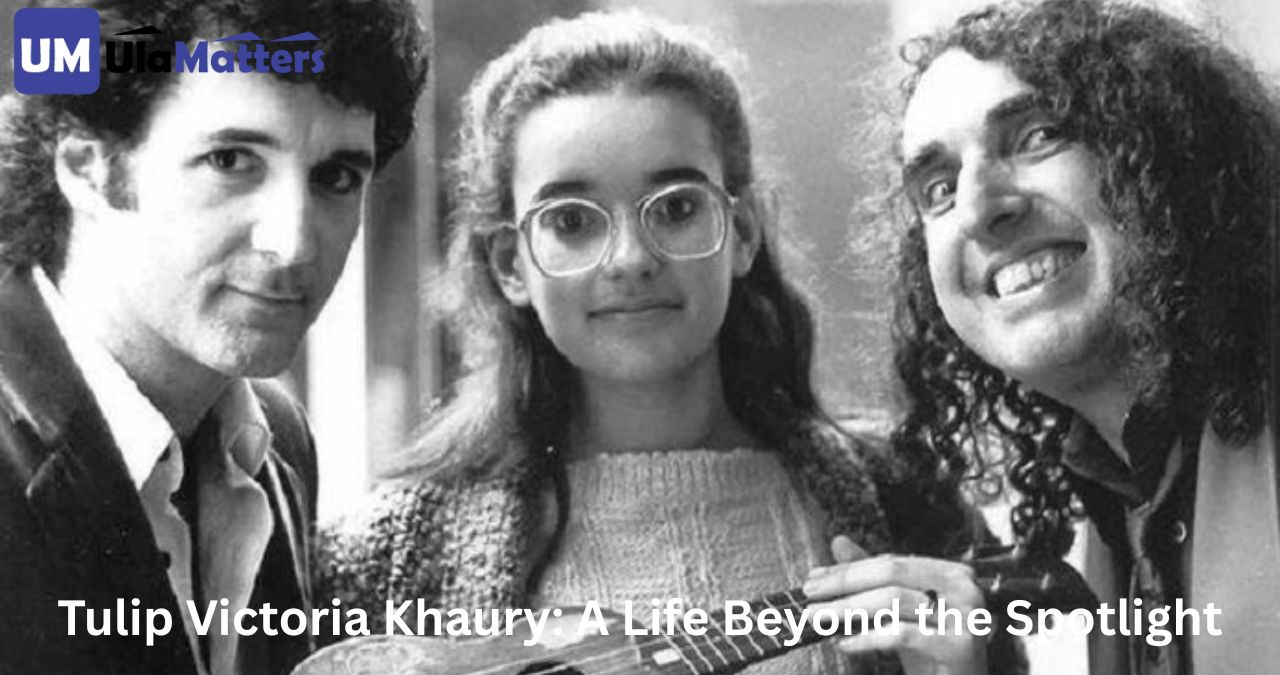
Growing up in that environment—where performance, public attention, and artistic identity were part of daily life—Tulip’s childhood was anything but average. Yet despite the outward oddities of her father’s career and their public image, her upbringing appears to have had grounding influences: the image of mother and daughter together in a 1972 photograph captures a more traditional family moment amidst the fanfare.
Navigating Legacy and Identity
To be the child of Tiny Tim was to live with two realities: one public, flamboyant and surreal; the other private, normal and human. Tulip Victoria’s challenge was to negotiate those dualities—the bright lights of a father whose life was performance art and the quieter world of self that each person carves for themselves.
She inherited not just a name tied to performance art, but also a world of heritage: the Khaury surname ultimately traces back to Lebanese lineage, mixing with American show-business culture. Through that intersection, Tulip’s identity has always had layers: daughter, legacy-bearer, individual.
Adult Life and Choices
As with many children of celebrities, Tulip Victoria Khaury seemingly opted for a life largely away from the glare of entertainment headlines. According to genealogical sources, she later took the married name Stewart (spouse: William Ervin Stewart) and raised a family of her own. Some records, such as on Geneanet, list her as the mother of daughters Cherice R., Jade and other children. Her decision to build a life beyond her father’s singular fame suggests a conscious choice: to be more than “Tiny Tim’s daughter,” and to define her path on her own terms.
Her story, though less publicized, carries quiet dignity. She appears to have embraced roles of parenthood, family, and personal continuity rather than stepping into the performance-legacy route of her father. That decision itself speaks of maturity and self-determination.
Relationship with Her Father’s Legacy
Tiny Tim remains an eccentric icon of pop culture; his style and persona still inspire fascination and curiosity. For Tulip, his legacy is both gift and foil: the gift of a well-known last name and the foil of living under public curiosity and expectation. Navigating that terrain means redefining, at least internally, what that legacy means for her.
The photo of Tiny Tim with Tulip as a child underscores that connection—and yet, as years passed, Tulip’s own public profile became low-key. She appears to have allowed the legacy to exist without letting it dominate her life. In that sense, she stands as a subtle counterpoint to the spotlight-centric narrative of celebrity progeny.
Values and Quiet Influence
What emerges from the limited information available is a theme of quiet resilience, family orientation, and personal independence. Tulip Victoria’s decision to live privately, raise her family, and maintain a personal life outside of show business demonstrates a deliberate choice of priorities: meaning over fame, presence over publicity.
It’s also worth noting that in an era when celebrity children are increasingly visible, Tulip’s relative absence from the public eye can itself be a statement: that not all legacy needs to be broadcasted, and that privacy is a legitimate and valuable space.
The Overall Meaning of Her Story
Tulip’s journey tells us something broader about legacy, identity, and choice. Being the child of a famous and eccentric performer does not bind one to the same path. Instead, it can provide a foundation from which to build something different—something quieter, yet no less significant. Her life prompts reflection on what success means: is it public acclaim or personal fulfilment? Is it continuity or divergence?
Moreover, her story encourages an appreciation of those quietly living their lives beyond headlines—people who carry history, heritage, and yet make daily choices that define their unique narrative.
Conclusion
Tulip Victoria Khaury may not occupy tabloid covers or dominate social feeds, but her life is rich in nuance, choice, and significance. She reminds us that legacy is not destiny, that the offspring of fame may choose discretion and authenticity over spectacle, and that identity is not simply inherited—it’s crafted.
In witnessing her path—from the daughter of a cultural oddity to a private individual anchored in family and self—we see the power of quiet decision, the dignity of independence, and the strength of living life on one’s own terms. Tulip Victoria’s story lies not in grand headlines but in the human narrative of navigating two worlds: one extraordinary, one ordinary, and making peace with both.
Her life invites us to see beyond celebrity labels and remember that every person behind a familiar name holds a story worth acknowledging—one of choices, relations, and the terrain between public image and private reality.